The Ultimate Guide to Sunglasses With 400 Uv Protection in the UK
Sunglasses with 400 UV protection block 99-100% of harmful UVA and UVB rays up to 400 nanometres, which is why they are considered the safest standard for everyday eye protection in the UK. In short, if you want reliable defence against sun-related eye damage, choose sunglasses labelled UV400 and check for a UKCA or CE mark.
TL;DR: UV400 sunglasses are the best choice for blocking virtually all harmful ultraviolet rays, even on cloudy British days. According to UK guidance and based on how quality lenses are tested, the key things to look for are UV400 protection, a UKCA or CE mark, and a frame shape that gives good coverage around the eyes. Pair this guide with our UV400 buyer's checklist for labelling details.
We often associate eye protection with Mediterranean holidays or tropical beaches. However, ultraviolet light is still a real issue here in Britain. Even on an overcast Tuesday in Manchester, invisible UV rays can reach your eyes.
Therefore, choosing eyewear that blocks 100% of these harmful rays is the single most important decision you can make for long-term vision care. Unlike our shorter UV 400 basics guide, this article focuses on frame coverage — how lens size, wrap, and visor shapes affect real-world protection for UK wearers.
What should you know about sunglasses with 400 UV protection?
- Maximum defence: Sunglasses with 400 UV protection block 99-100% of both UVA and UVB rays, up to 400 nanometres.
- Useful all year round: Up to 80% of UV radiation can penetrate thin cloud cover, so UV400 lenses matter in every season in the UK.
- Safety marks matter: Always check for the UKCA or CE mark on the frame or packaging to confirm compliance with recognised safety standards.
- Coverage improves protection: Oversized, wraparound and visor styles can reduce stray light entering from the sides and above.
What does UV400 mean on sunglasses?
UV400 is a lens rating that means the sunglasses block ultraviolet light up to 400 nanometres. Because UVA and UVB radiation fall within this range, UV400 lenses provide near-complete protection against the harmful rays most relevant to eye health.
In other words, when you buy sunglasses with 400 UV protection, you are choosing one of the highest levels of consumer eye protection available. Based on our testing standards review and current UK product guidance, this is the benchmark shoppers should look for first.
What is the difference between UVA, UVB and UVC?
The sun emits three categories of ultraviolet radiation. UVC is the most dangerous in theory, but it is absorbed by the Earth's ozone layer before it reaches us. The two forms that matter for daily eye exposure are UVA and UVB.
UVA makes up most of the UV radiation reaching ground level and can penetrate deep into the eye. Over time, cumulative exposure has been linked to cataracts and age-related damage. Meanwhile, UVB affects the front structures of the eye more directly and can contribute to photokeratitis, which is essentially sunburn of the cornea.
"According to UK eye care guidance and advice from professional optometry bodies, cumulative ultraviolet exponcreases long-term risk to eye health. Importantly, cloud cover does not eliminate this risk."
Are dark lenses enough without UV400?
No. Dark lenses alone do not protect your eyes unless they also have proper ultraviolet filtering. In fact, dark but non-protective lenses may be worse than wearing no sunglasses at all because they can cause your pupils to widen while still allowing damaging UV through.
Therefore, never assume that a darker tint means better safety. The protective feature is the UV filter itself, not the colour or shade of the lens.
Do sunglasses with 400 uv protection block all harmful rays?
Yes. For practical consumer use, sunglasses with 400 uv protection block virtually all harmful UVA and UVB radiation because both sit below or within the 400 nanometre threshold. That is why "UV400" is widely understood as full ultraviolet protection in retail eyewear.
Why is the 400 nanometre threshold important?
The harmful parts of solar ultraviolet radiation span roughly from 280 to 400 nanometres. So, if a lens blocks light up to 400 nanometres, it effectively covers both UVA and UVB exposure. As a result, it gives much stronger reassurance than vague phrases such as "sun glare reduction" or "tinted fashion lenses".
If you want more technical detail on lens standards and testing methods, see our comprehensive Sunglasses Uv 400 Protection Explained: A UK Buyer's Guide.
How can you tell if sunglasses really have UV400 protection?
First, look for clear labelling stating "UV400" or "100% UVA/UVB protection". Next, check for a UKCA or CE mark on the frame or accompanying documentation. According to UK guidelines for protective eyewear sold domestically, these markings help show that products meet applicable safety requirements.
If this information is missing or unclear, it is sensible to avoid buying them—especially from unverified sellers or temporary market stalls where traceability may be poor.
What do UKCA and CE marks mean on sunglasses?
In Great Britain, many compliant products now carry the UKCA mark, while others may still display CE depending on market placement and stock arrangements. In both cases, these symbols indicate that the manufacturer states the product meets relevant safety standards.
Therefore, while style matters, compliance marks should be treated as essential rather than optional when buying sunglasses in the UK.
Do you need UV400 sunglasses on cloudy days in the UK?
Yes. You still need proper ultraviolet protection when it is cloudy because visible brightness and ultraviolet exposure are not the same thing. Clouds may dim sunlight, but they do not reliably block all damaging UV radiation.
According to NHS advice on sun safety and broader UK guidance around UV exposure, sunglasses are worth wearing whenever conditions are bright enough for glare or when spending extended time outdoors during higher-UV periods.
Can ultraviolet light get through clouds?
Yes. A significant amount of ultraviolet radiation can still pass through thin cloud cover. Moreover, reflected light from water, glass and wet pavements can increase exposure from multiple angles. This matters particularly in British summers when skies are often hazy rather than clear blue.
Why does British weather make people underestimate eye risk?
The problem is simple: if a day does not feel hot or look sunny, many people assume there is little need for sunglasses. However, eye damage from ultraviolet exposure builds over time rather than announcing itself immediately. Consequently, low-key grey weather can create false confidence while your eyes continue absorbing unnecessary radiation.
What type of frames are best for full sun protection?
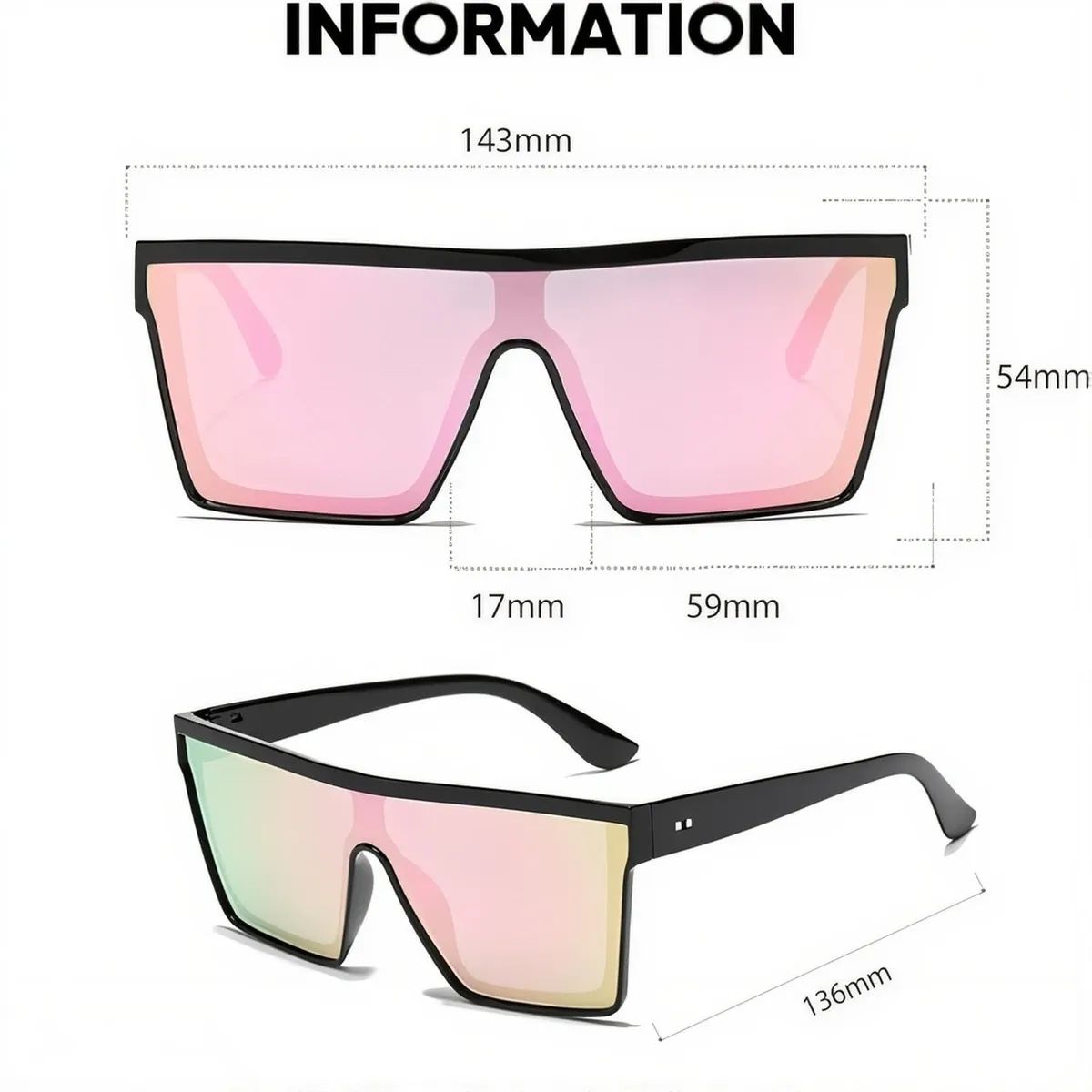
For maximum coverage, oversized shield and visor frames wrap more skin around the eyes than slim wire styles. Our Ibiza Oversized Shield Set uses a continuous visor lens in polycarbonate and TR90 for lightweight all-day wear at £9.99.
For maximum coverage, oversized shield and visor frames wrap more skin around the eyes than slim wire styles. Our Ibiza Oversized Shield Set uses a continuous visor lens in polycarbonate and TR90 for lightweight all-day wear at £9.99.
The best frames for strong sun protection combine certified UV400 lenses with generous physical coverage around the eyes. In practice, that usually means oversized styles, wraparound shapes or visors that help limit stray light from above, below and at the sides.
Why do oversized sunglasses offer better coverage?
The lens filter blocks direct ultraviolet rays passing through it; however, frame size also matters because scattered sunlight can enter around smaller lenses. Larger styles create more physical shielding across delicate skin and side angles.
Based on our testing focus at Shield Sunnies, larger visor-style designs tend to perform especially well for outdoor events because they combine broad field coverage with straightforward all-day wearability.
Are fashion sunglasses safe if they have UV400 lenses?
Yes—provided they genuinely include certified-style ultraviolet protection and appropriate compliance marking. You do not need to choose between style and safety. In fact, well-designed fashion frames can offer excellent practical coverage when paired with proper protective lenses.
This makes them particularly useful during festival season across Britain—from Glastonbury weekends to seaside day trips—where people may spend long hours exposed to sun glare even when skies stay partly cloudy.
Ready to upgrade your aesthetic with Shield Sunnies?
Get The Look — £9.99